

The spring of 2023, the spring I became a literary agent, was an eventful and clarifying season for me. At the time, I was two years into hosting a podcast for women recovering from purity culture, managing a large Facebook group for survivors, and I was in the process of pursuing a non-fiction book deal—having frequent meetings with acquisitions editors and agents, many of whom had first reached out to me. It was the culmination of why I had started sharing my story publicly and of creating a platform for others seeking community, kinship, and resources for recovery.
But that spring, a new sex and marriage book by a popular Arizona megachurch pastor helped me realize that though I wanted better books about sexuality out in the world, I didn’t necessarily want to be the one to write them. I was already weary of the pressures and criticisms that come with being a person with any amount of influence and a platform online—especially in religious and faith-adjacent spaces. Especially talking about sex and sexuality in religious and faith-adjacent spaces. I mostly enjoyed the aspect of podcast hosting that involved elevating other voices, stories, authors, and experts. That’s all I wanted to do: minimize that which is harmful to women like my listeners and me, and elevate that which is helpful and empowering to women like my listeners and me.
So when an excerpt from a forthcoming marriage book by this megachurch pastor was posted to immediate virality and mockery because of its gross misuse of metaphor and interpretation of scripture to describe married sex as a sort of salvation and how “Christ penetrates his church,” I entered the chat. Because I was able to immediately access the full text of the book on Netgalley, I had more context than just the out-of-context excerpt making its rounds as Twitter’s main character (a role no sane person wishes upon themselves). When I opened the PDF galley of this book, I was shocked to find several trusted religious leaders among the endorsements lined up in the opening pages of the document.
That evening, I entered the fray with the list of endorsers and screenshots of their endorsements because the accountability of leaders complicit in the spread and endorsement of theology that is harmful to many women was and is very important to me. Much of my own religious trauma, after all, can be linked back to the many harmful books I read as part of the True Love Waits era’s unofficial purity syllabus. The next morning, I woke up to many of these leaders retracting their endorsements and confessing to not having read the book manuscript before agreeing to endorse it (setting off an adjacent conversation about the ethics of book endorsements in Christian publishing). The morning after that, I woke up to some very traumatic DMs accusing me of contributing to the reason the author of this book had ended his own life, which I soon learned wasn’t true and that the DMs were sent by the very worst kind of trolls. You can read more about how this saga went down and what my involvement was here and here if you wish, but the details are not why I am telling you this story.
The feeling I felt in the brief moments I believed these DMs to be true did something to me that can’t be undone—and I never wanted to write or create for a Christian audience again. I wanted to abandon all of my projects and make a hard pivot to something else—anything else. I wanted to leave the internet for good. I was certain any future I had in Christian publishing had gone up in flames anyway.
But one month later, I was offered an opportunity to become an associate literary agent at the literary agency that represented Rich Villodas, the first pastor and author to retract his endorsement. I was truly stunned that they would want to hire me after the shenanigans I had gotten myself into on Twitter the month before (shenanigans I still stand by, by the way). I had been building my relatively new career in publishing, working as an acquiring editor for a faith-based hybrid press, and I had just secured a lucrative collaborative writing contract after being a contributing writer to Christianity Today. I didn't have agenting on my radar, but I felt like the timing was urging me to be a literal agent of change in the publishing industry. As an agent, I’d perhaps have even more power to elevate the voices and writers and stories and experts I wanted to see more of in the world—both in Christian publishing and in the general market.
And that’s exactly what I set out to do.
Introducing FAMISHED: On Food, Sex, and Growing Up as a Good Girl by Anna Rollins
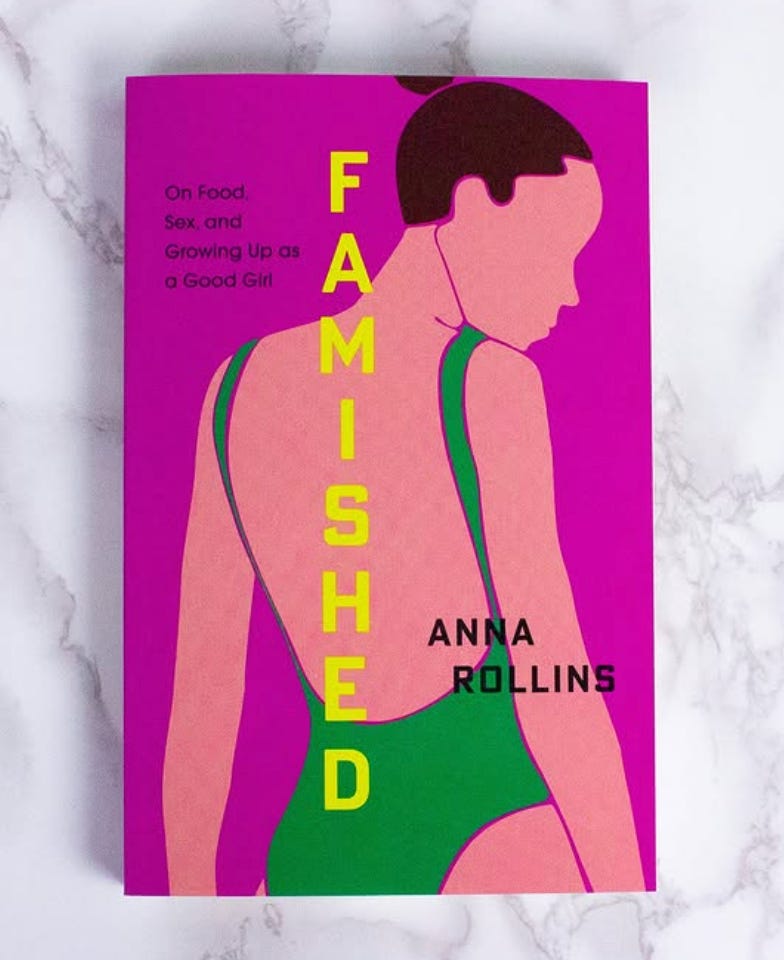
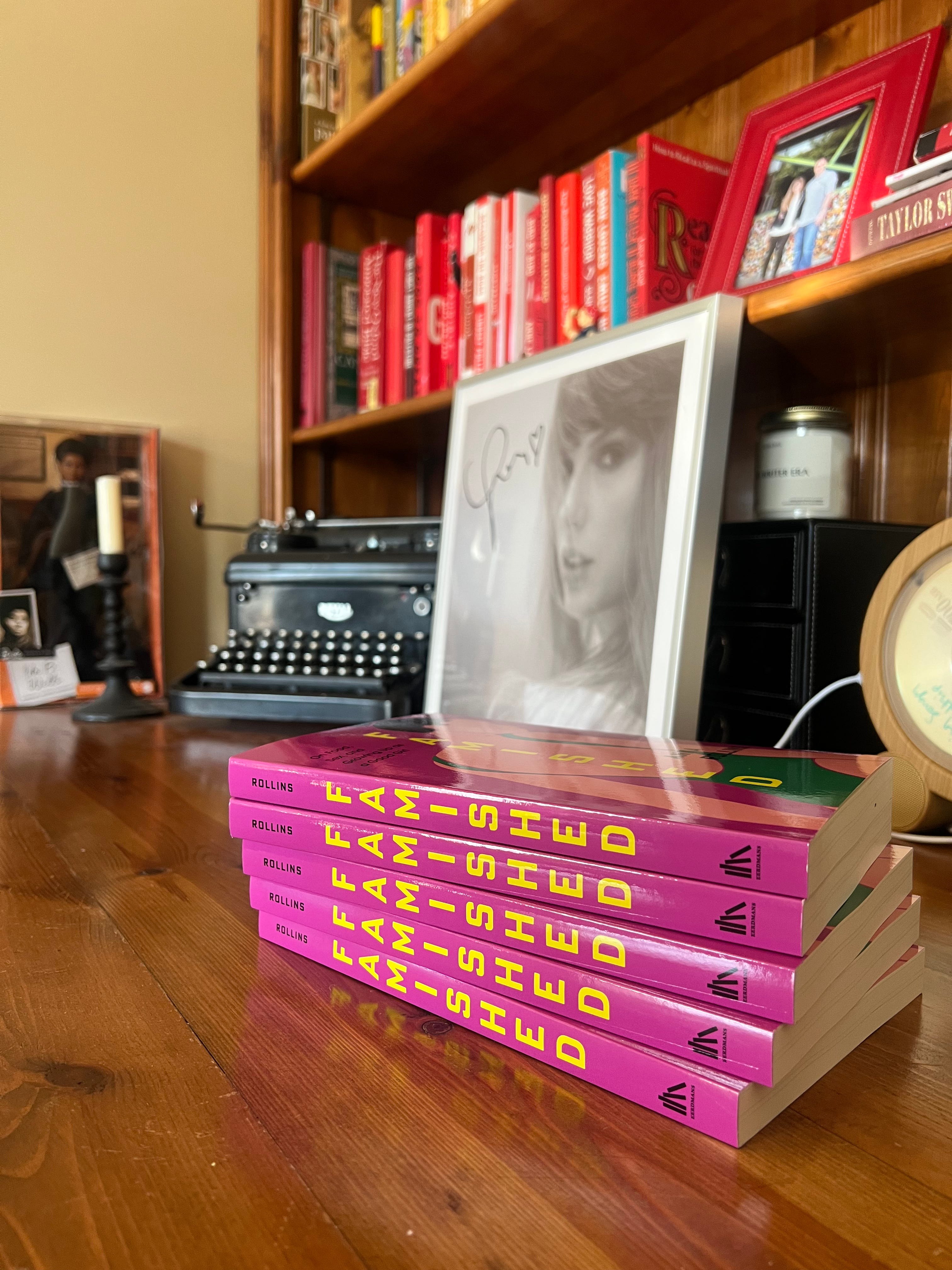
Today is the release day for the first author I signed as a literary agent, Anna Rollins, and her book, Famished—the first book I sold as a literary agent.
I have had several other clients release books in 2025—books I, too, am very proud to represent—but there’s nothing quite like seeing my very first author and our very first book together make its way into the world. Especially given the context in which I entered this role, paired with the masterful storytelling Anna does in portraying the realities of many of us who are recovering from growing up in religious environments thick with both purity culture and diet culture.
Here is the publisher’s description copy of Famished:
A groundbreaking debut memoir that examines the rhyming scripts of diet culture and evangelical purity culture, both of which direct women to fear their own bodies and appetites
Raised Baptist in an insular Appalachian community, Anna Rollins learned early that among the world’s many dangers, her own body loomed large. So, she dedicated herself to keeping it small—strictly controlling her calories and exercising to the point of exhaustion while murmuring some version of the prayer: “We must decrease so that He can increase.”
She was picking up a similar mantra online: “Nothing tastes as good as skinny feels.” To be a Christian woman was to be thin and chaste, sidestepping any pleasures of the flesh that would cause you—or a brother in Christ—to stumble into sin. But thinness was also a sign of virtue to the outside world. By day, Rollins attended schools and churches where male pastors and older women policed female bodies. By night, she scrolled websites and chat rooms where dieting itself inspired a kind of religious devotion.
Despite Rollins’s piety, anger grew in her chest. “I was all hunger, all need. I was ashamed. But I was also proud. I knew that I was also physical, embodied, a person with desires, despite how frequently I was told that I was not.”
Still, it wasn’t until she found herself obsessing over how she would burn off the pasta she ate for dinner while watching her infant son struggle to breathe in the ICU that Rollins could admit to herself the extent to which she’d bought into the false promises of both purity and diet culture: That if she controlled her appetites, she would be righteous. That if she made herself smaller, she would be safe.
Blending memoir, research, and reporting, Famished untangles these lies and encourages women to reclaim their appetites for life, love, and food, both physical and spiritual. Interweaving her own story of disordered eating and sexual dysfunction with those of other women she interviews, Rollins discovers a sisterhood committed to finding freedom from body shame. Along the way, she rewrites her own body’s story to include a purpose much greater than its size or parts or the roles she fills as daughter, wife, and mother, a body well-loved by her and beloved by God.
I signed my contract to join The Bindery Agency as a literary agent on April 10, 2023 with a May 1 start date. On April 11, I sent my first inquiry to a writer I knew I wanted to represent—one I had connected with in the Facebook group for purity culture survivors I previously managed and who had interviewed me months before for the manuscript she had been working on.
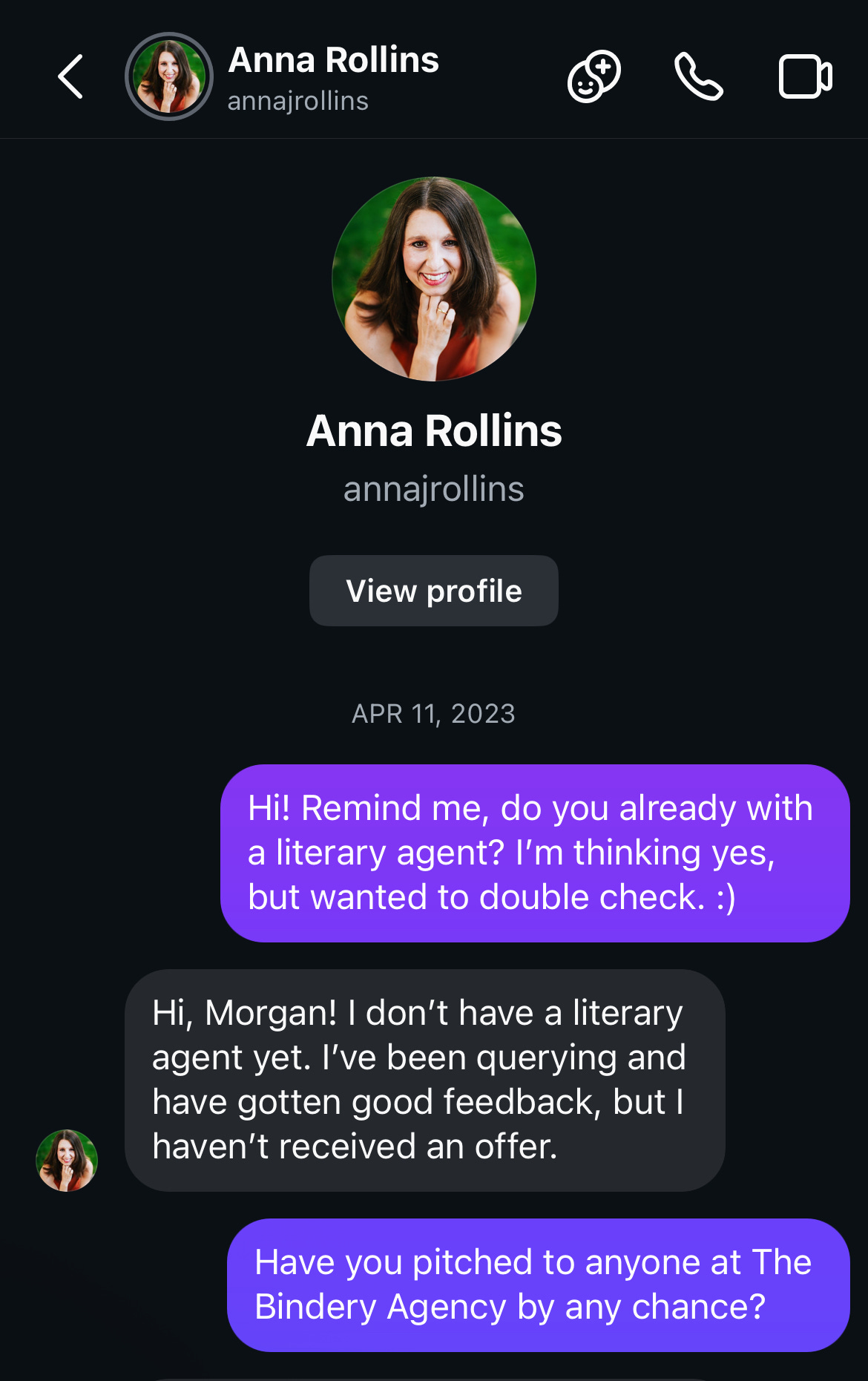
Anna had only ~500 Instagram followers at the time I reached out to her and invited her to query me on my first day at the agency (which she went on to do). I sometimes joke around and say that I was too naive to know better than to take on a memoir project from a relatively unknown debut author with such a tiny social media platform. But all of publishing is a gamble, and this has been one of the best gambles I’ve made yet. We sold her memoir to Eerdmans later that summer after receiving interest from a variety of different publishers.
I talk pretty frankly about the business aspects of traditional publishing here on Writing Is A Team Sport. I am a business partner to my authors, and my primary role as their literary agent is to successfully sell their book to a publisher. There are other aspects of my role as their agent, to be sure, but my primary one is to secure book deals for authors. For many agents, building a client list is mostly about this one thing because it’s the most important thing.
When I’m considering potential projects, however, I find myself asking this question no matter the deal potential any particular project has: Is this a book I would be proud to recommend?
I have passed on several lucrative projects that went on to sell for multiple six-figures in multi-book deals because I couldn’t, in good faith, be a part of a book I believed would do more harm than good in the world. And I have taken on smaller projects that earned much smaller deals, or maybe no deal at all—yet—that I still remain proud to have taken on, even if I only made enough money to pay for a single month’s worth of groceries (which is not nothing).
For the past decade, stories and research have been pouring in about the damage done, largely by books, during the height of purity culture in the 1990s and 2000s. It was the catalyst for my deconstruction, my near loss of faith, and the crumbling of a marriage built on sand. As a former creator who sought to help women who grew up in purity culture, I received messages weekly from women who, too, were desperately trying to undo, unlearn, and heal from the ill-informed messages about bodies and sex that were propped up and given to them by people they trusted — largely through books. The indoctrination of purity culture happened more in books than in any personal or pastoral conversation.
Books, in many ways, become a part of who we are, the decisions we make, and the people we become as we store the words within them in our hearts and minds.
Books teach us.
Books parent us and reparent us.
Books form us.
Books can enrich our lives in tremendous ways.
As readers, if we are not taught to read deeply and effectively, and to think critically about that which we are reading and being recommended, the messages we pick up and internalize through books can impact our lives in harmful ways.
And as an agent—someone who is sometimes referred to as a “gatekeeper” to the publishing industry—I also must think critically about the books that I am championing and offering to sell to some of the largest, most influential publishers in the world.
Poet Maya Angelou once said, “Do the best you can until you know better. Then when you know better, do better.” As more people speak up and contribute to the growing research on the impact of Christian sex and marriage books on women and marriages, I hope that those involved in the writing of, publishing of, and endorsing of our Christian formational tools will begin to think about their books as critically, and in community, as we hope their readers will.
For all of the reasons above, I am incredibly proud to recommend and to be associated with Anna’s gorgeous debut memoir, Famished: On Food, Sex, and Growing Up as a Good Girl. Now available everywhere books are sold!
Anna: THANK YOU for letting me be on your team. It continues to be a tremendous joy to champion your story and your voice.
Wow!! Wow, wow! This is incredible. I am SO glad you took me on, even with basically no platform, for a genre (memoir) that hardly ever sells. I think it's amazing this book exists, and you are the primary reason it does. Thank you for everything! Yes to better books, to knowing better and doing better.
Ok so I knew some of this but this is quite the backstory! And it makes me even more grateful for our partnership. In addition to being grateful that my book wouldn’t exist without you approaching me and offering to take my voice to the publishing market!